
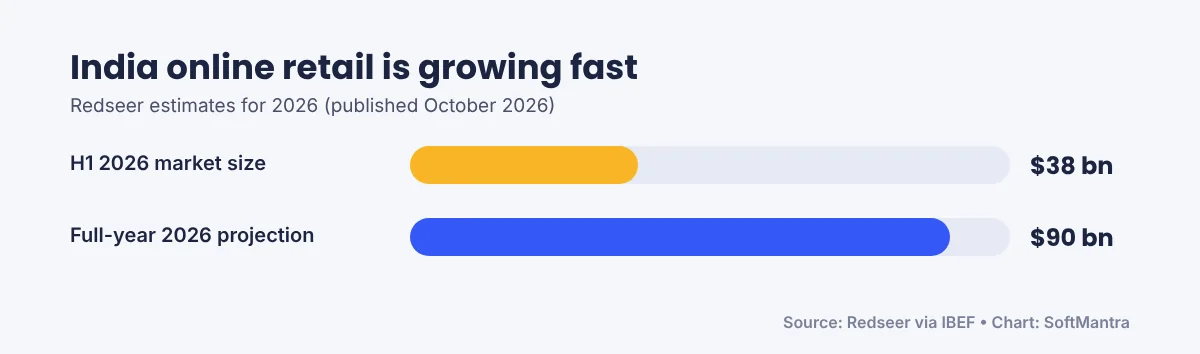
Indian online retail is on track to cross US$ 90 billion in 2026, growing 22% to 24%, its fastest pace in five years, according to Redseer (IBEF). More shoppers means more competition for every product search.
Ads can buy traffic, but e-commerce SEO builds traffic you do not pay for each click. This guide covers what Indian store owners should prioritise, from category pages to product schema and AI shopping answers.
Quick answer: E-commerce SEO for Indian stores means making category and product pages easy to crawl, fast on mobile, unique and well structured, with product schema, reviews and helpful buying guides. Start with technical health and category pages, because they target the highest-volume searches.
In this guide
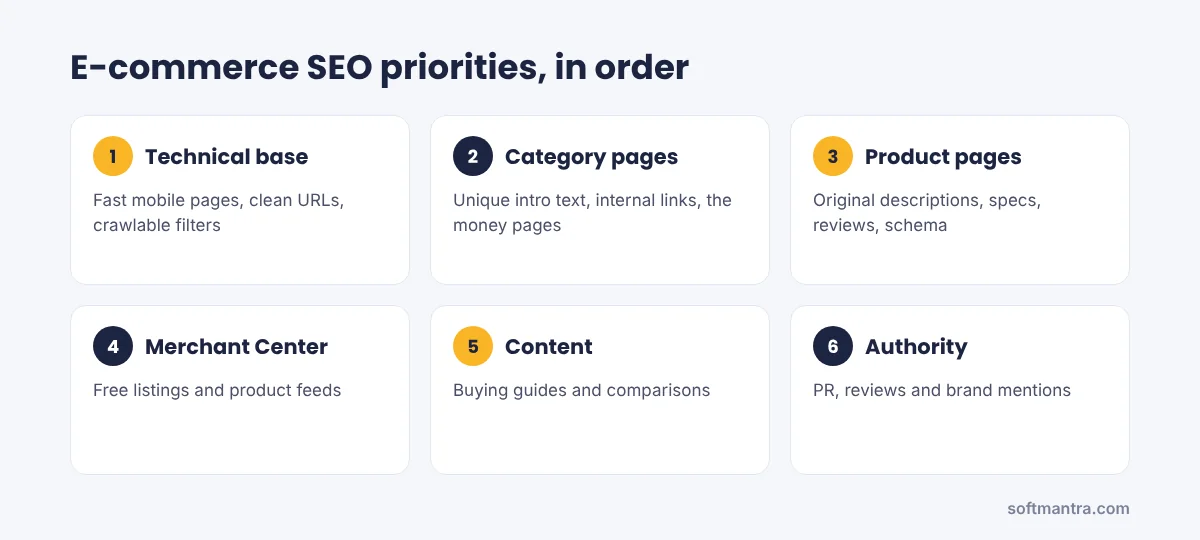
E-commerce SEO Priorities at a Glance
Technical SEO for Online Stores
- Mobile speed: most Indian shoppers browse on phones, often on slower networks. Compress images and keep pages light.
- Clean URLs: short, readable category and product URLs.
- Filters and facets: sorting and filter combinations can create thousands of near-duplicate URLs. Google’s e-commerce documentation explains how to manage them (Google).
- Out-of-stock pages: keep them live with alternatives if the product returns; redirect if it is gone for good.
Category Pages: Your Biggest Opportunity
Category pages usually target the biggest searches, such as “cotton kurtis for women” or “running shoes for men”. Give each one:
- A short, useful intro (100 to 200 words) above or below the products.
- A clear H1 that matches the main search term.
- Internal links to related categories and top products.
- Filters that help users without creating endless indexable URLs.
Product Pages That Rank and Convert
- Original descriptions, not copied manufacturer text.
- Full specifications: size, material, warranty, delivery time to Indian pin codes.
- Real customer reviews and photos.
- Product schema with price, availability and ratings so Google can show rich results. Our schema markup guide explains how.
- Clear return and COD information, which Indian buyers look for before ordering.
Running a store on Shopify, WooCommerce or a custom platform? Our e-commerce SEO services cover technical fixes, category content and product schema.
Google Merchant Center and Free Listings
Google Merchant Center lets products appear in free listings across Google Shopping and other surfaces. Combined with good product pages, it adds visibility without ad spend. Google’s e-commerce SEO documentation covers how product data and structured data work together (Google).
Content That Brings Buyers
- Buying guides (“how to choose a mixer grinder for Indian cooking”).
- Comparison pages (“cotton vs linen shirts for summer”).
- Answers to common questions, which also help in AI shopping answers. See our AEO guide.
- Regional language content if your buyers search in Hindi or other languages; our multilingual SEO team can help.
Common E-commerce SEO Mistakes
- Thin category pages with only a product grid.
- Duplicate descriptions copied across sizes and colours.
- Indexing every filter combination.
- Ignoring site speed during sale seasons like Diwali, when traffic peaks.
For a broader view, read how to run a profitable online store and compare our e-commerce SEO packages.
Want more organic sales before the next sale season? Talk to SoftMantra about an e-commerce SEO audit.
Key Takeaways
- India’s online retail market is projected to cross US$ 90 billion in 2026, so organic visibility matters more each year.
- Fix technical basics first, then build strong category pages, then improve product pages with schema and reviews.
- Add buying guides and FAQs to win both Google and AI shopping answers.
Frequently Asked Questions
How long does e-commerce SEO take?
Technical fixes can show results within weeks, but category and product rankings usually build over three to six months, depending on competition.
Should I write unique descriptions for every product?
Yes, for your most important products at least. Copied manufacturer descriptions appear on many sites and give Google little reason to rank yours.
Should filter pages be indexed?
Only filter combinations that people actually search for, such as a popular colour or brand. Keep the rest out of the index to avoid duplicates.
Does product schema help e-commerce SEO?
Product schema helps Google understand price, availability and ratings, and can make your products eligible for rich results.