
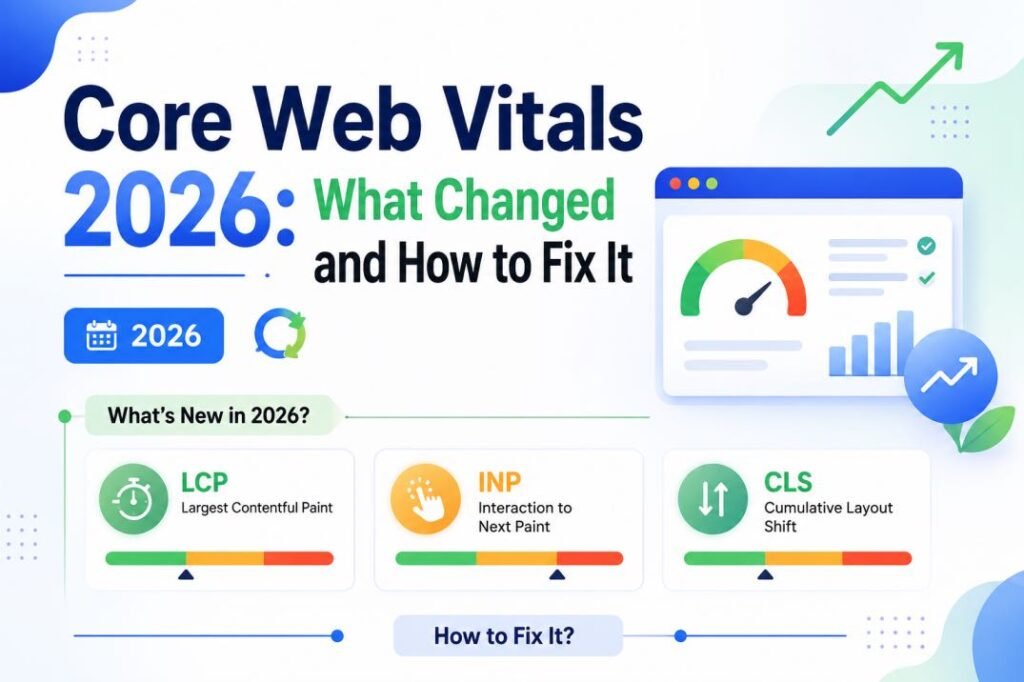
Core Web Vitals have quietly become one of the more stable, if still evolving, technical SEO factors. In 2026, the focus has shifted noticeably from raw loading speed alone toward real interaction responsiveness – meaning many sites that passed old tests are now falling behind on newer standards.
What Are Core Web Vitals in 2026
- Largest Contentful Paint (LCP) – how quickly the main content loads
- Interaction to Next Paint (INP) – how responsive the page feels during actual use, replacing the older First Input Delay metric
- Cumulative Layout Shift (CLS) – how much the page visually shifts as it loads
Why INP Now Matters More Than Ever
Interaction to Next Paint measures real responsiveness throughout a user’s visit, not just the first click. Sites with heavy JavaScript or poorly optimized interactive elements often struggle here even if their initial load speed looks fine.
Want a full Core Web Vitals audit for your website? SoftMantra’s technical SEO audit covers this in detail.
Practical Fixes for Common Issues
Fixing Slow LCP
Optimize and properly size images, use a content delivery network, and ensure your main content does not wait on unnecessary render-blocking scripts.
Fixing Poor INP
Reduce unnecessary JavaScript execution, break up long tasks, and ensure interactive elements respond quickly even under load.
Fixing Layout Shift
Reserve space for images and ads before they load, and avoid inserting new content above existing content after the page has rendered.
Need hands-on technical fixes implemented, not just diagnosed? Our technical SEO team can handle this directly.
Common Mistakes When Addressing Core Web Vitals
- Fixing only LCP while ignoring INP, which now carries significant weight
- Testing only on desktop when most real traffic is mobile
- Making one-time fixes without ongoing monitoring as the site changes
How to Measure Improvement
Use Google Search Console’s Core Web Vitals report alongside PageSpeed Insights for page-level detail, and track real user data through the Chrome User Experience Report where available, since lab data alone does not always reflect real visitor experience.
Why This Requires Ongoing Technical Attention
Core Web Vitals standards continue to shift as browsers and user expectations evolve. SoftMantra’s technical SEO team stays current with these changes as part of our ongoing client work, backed by 15+ years of technical SEO experience from our Delhi NCR base.
Frequently Asked Questions
Q: Do Core Web Vitals still directly affect rankings in 2026?
Yes, they remain a ranking factor, though content quality and relevance still carry more overall weight than technical performance alone.
Q: What replaced First Input Delay?
Interaction to Next Paint (INP) replaced First Input Delay as the responsiveness metric, measuring interaction speed throughout the entire visit rather than just the first click.
Q: How do I check my current Core Web Vitals scores?
Google Search Console’s Core Web Vitals report and the free PageSpeed Insights tool both provide detailed, page-level performance data.
Q: Can Core Web Vitals issues hurt conversion rates too?
Yes, slow or unresponsive pages typically hurt both search rankings and user conversion rates, making these fixes valuable beyond SEO alone.
Q: How often should Core Web Vitals be monitored?
Monthly monitoring is reasonable for most sites, with immediate re-checks after any significant website updates or redesigns.
Core Web Vitals remain a genuine, ongoing technical priority, not a one-time fix. Talk to SoftMantra about auditing and improving your site’s performance.